You've already done the obvious work. The site is live, the category pages are optimized, the product or service pages are mapped to intent, and the blog content is better than what most competitors publish.
Yet rankings stall.
That usually happens when a business has relevance but not enough authority. Google can understand what your site is about, but it still needs stronger external validation before it trusts you with competitive queries. AI search systems work similarly. They favor brands that are cited, discussed, and connected to credible sources across the web.
That's where blogger outreach services come in. Not as a vanity SEO add-on, and not as a shortcut to “more backlinks,” but as an authority-building channel that can influence rankings, referral traffic, brand perception, and in some cases pipeline quality.
For founders and CMOs, the core question isn't whether blogger outreach exists. It's whether it deserves budget ahead of other SEO work, how to choose the right delivery model, and how to measure if it's producing business value.
When Great Content Is Not Enough
A common scenario looks like this.
A SaaS company publishes feature pages, comparison pages, and a well-structured blog. An ecommerce brand cleans up its category architecture and improves internal linking. A local service business builds useful city pages and sharpens its Google Business Profile. All three expect organic growth to follow because the onsite work is solid.
Sometimes it does. Often it doesn't.
The reason is simple. Search visibility isn't driven by onsite quality alone. Once a site clears the technical and content baseline, rankings often depend on whether the broader web treats that business as a trusted source worth citing. If competitors keep earning mentions in niche publications, industry blogs, roundups, and editorial articles, they keep accumulating the trust signals your site lacks.
The visibility wall founders run into
This is the point where many teams make a bad decision. They publish even more content without fixing the authority gap.
That usually creates a larger library with the same ceiling.
A better response is to ask:
- Are competitors being cited more often: Look at who gets mentioned in listicles, reviews, expert roundups, and resource pages.
- Are commercial pages unsupported: Product, service, and demo pages usually need authority flowing into them from relevant external references.
- Is your brand absent from industry conversations: If nobody in your niche links to you, Google has less evidence that you belong near the top.
Strong content gives you something worth ranking. Outreach helps create the off-site evidence that supports those rankings.
Why blogger outreach matters now
Blogger outreach services sit at the intersection of link building, digital PR, and authority development. When done well, they help a brand earn relevant editorial placements on websites that already have audience trust and topical relevance.
That matters for classic SEO. It also matters for AI visibility, where clear citations and repeated third-party references help systems understand which brands deserve to be summarized, recommended, or quoted.
For a founder, the investment decision should be practical. If your site has technical issues, poor conversion paths, or weak commercial pages, outreach won't save you. If those foundations are already in place, outreach can become the lever that moves you out of the plateau.
What Blogger Outreach Services Actually Do
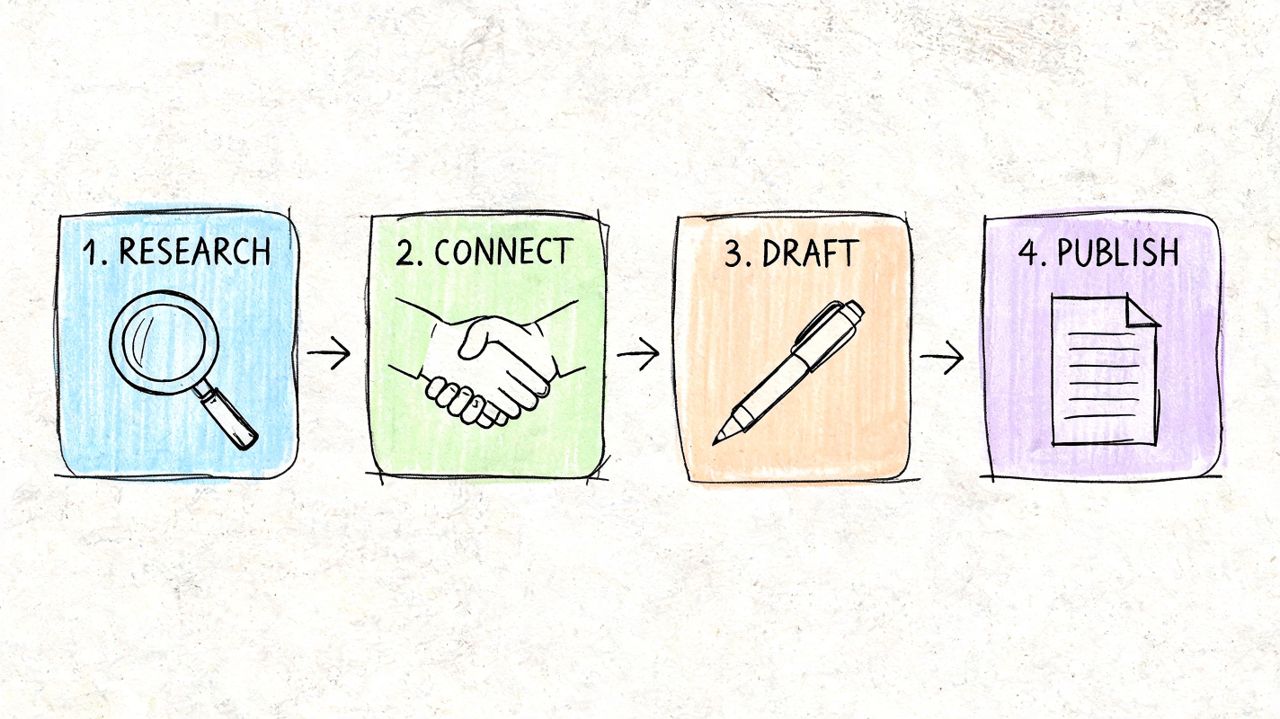
Blogger outreach services identify relevant publishers, contact them with a customized pitch, collaborate on content or editorial inclusion, secure a placement, and track what that placement does after it goes live.
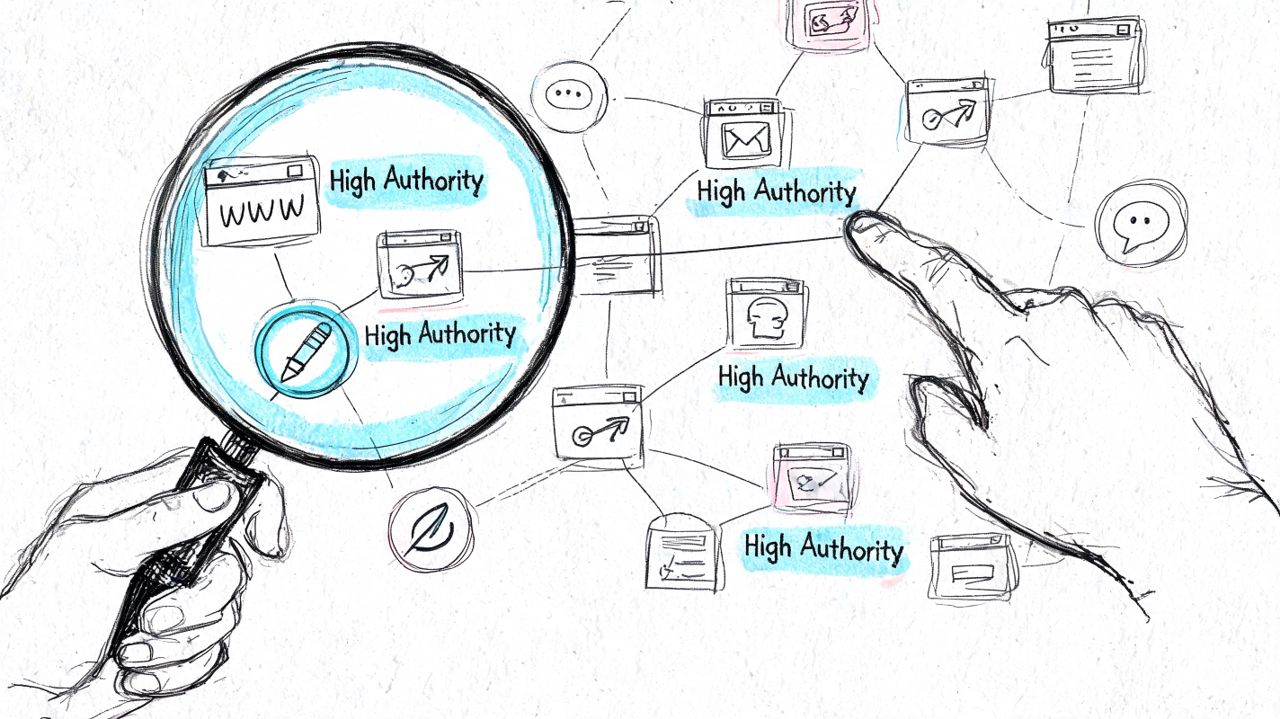
At a market level, this isn't a fringe tactic anymore. 68% of SEO professionals identify blogger outreach and guest posting as a core link-building tactic, according to Blue Tree's overview of blogger outreach services.
What a professional service includes
A real outreach campaign usually covers several moving parts:
Prospecting relevant sites
Teams use tools like Ahrefs, SEMrush, BuzzStream, or Pitchbox to find blogs and publishers that are both relevant and credible.Vetting quality
Good providers look beyond surface metrics. They review topical fit, editorial quality, traffic patterns, outbound link behavior, and whether the site exists for readers or just for selling placements.Pitch development
The outreach email matters. Editors ignore generic templates. Strong teams pitch a useful angle, resource, product insight, or expert contribution that fits the publication's audience.Content collaboration
Sometimes the provider writes a guest post. Sometimes the publisher writes the piece. Sometimes the opportunity is a quote, product inclusion, comparison mention, or resource reference.Placement management
A professional service manages approvals, timelines, follow-up, and link accuracy. That includes checking destination URLs, anchor text, noindex issues, and whether the final page is indexable.
What blogger outreach is not
It's easier to understand the service by stripping out the junk people confuse it with.
| Approach | What it looks like | Why it fails |
|---|---|---|
| Spam outreach | Mass emails with no relevance or personalization | Editors ignore it and sender reputation suffers |
| PBN placement buying | Links on manufactured sites built to pass authority | High risk, weak brand value, poor long-term durability |
| Commodity link lists | Paying from a menu of domains with no editorial fit | Little strategic control and often no real audience |
| Real blogger outreach | Relevant, editorial placements tied to brand goals | Stronger authority, better trust, better strategic fit |
Practical rule: If a provider can sell the same domain to any industry, they're usually selling inventory, not building authority.
The operating model is closer to publisher relations than bulk link purchasing. If you want a parallel from adjacent channels, teams working on scaling beauty brand influencer workflows face a similar challenge. The value doesn't come from contacting lots of creators. It comes from matching the right brand, audience, and editorial context.
The Business Case Benefits and Strategic Risks
A good outreach campaign can help rankings. That's only part of the business case.
The stronger reason to invest is that outreach can improve how your brand is perceived across the web. The best placements don't just pass authority. They put your business inside relevant conversations where buyers, journalists, analysts, and search systems can see recurring evidence that you belong in the category.
What you can gain
Legitimate outreach builds trust signals tied to E-E-A-T and AI visibility. Surveys show 81% of buyers trust blogger recommendations, and 4-in-10 subscribers trust bloggers more than friends, according to SEO.co's analysis of blogger outreach.
That creates upside in a few different ways:
- Stronger topical authority: Relevant editorial mentions reinforce your site's expertise in the categories you want to rank for.
- Qualified referral traffic: A mention on the right site can send visitors who are already problem-aware and closer to buying.
- Brand credibility: Being cited by recognized publishers often improves conversion efficiency after users land on your site.
- Content utilization: Outreach creates external assets your sales and marketing teams can reuse in nurture, social proof, and brand positioning.
For ecommerce, that can mean category pages and product pages gain authority support. For SaaS, comparison pages, feature pages, and demo paths benefit most. For local businesses, niche regional publishers and community blogs can help reinforce location relevance alongside broader SEO work.
Where campaigns go wrong
The risk is not “outreach” in the abstract. The risk is poor execution.
Bad blogger outreach services usually fail in one of these ways:
- They chase easy placements: You end up on low-quality sites that exist to sell links.
- They ignore relevance: A technically strong domain in the wrong niche won't help much.
- They separate links from strategy: The provider counts placements but can't explain how they support your money pages.
- They damage the brand: Thin sponsored posts and awkward insertions can make the business look cheap.
If the campaign report leads with link volume and hides the domains, you're looking at an inventory reseller, not a strategic partner.
The trade-off leaders should understand
Outreach is rarely the fastest SEO task to execute, and it shouldn't be. Research, relationship building, content coordination, and approvals take time.
That slower pace is often a good sign. Editorial trust usually isn't built through shortcuts.
The decision comes down to sequencing. If your site still has unresolved technical problems, broken internal linking, or weak conversion paths, fix those first. If your foundations are already solid and authority is the bottleneck, blogger outreach services become a defensible growth investment rather than an experimental spend.
Outreach Models and Pricing In-House vs Agency vs Freelancer
Many organizations do not struggle with the concept of outreach. Instead, they struggle with resourcing.
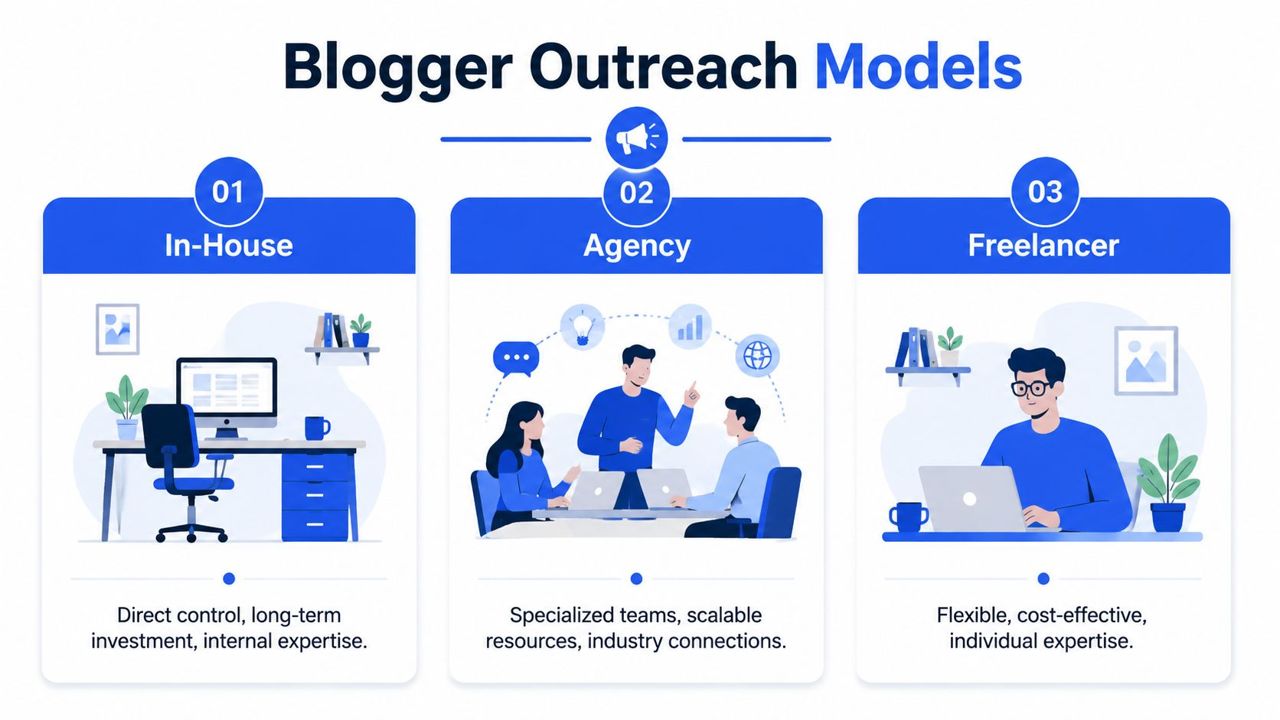
Should you build the function internally, hire a specialist agency, or piece it together with freelancers? The right answer depends on speed, control, budget tolerance, and how close outreach needs to sit to your SEO strategy.
Pricing reality
The market is wide. Pricing can range from $75 per link at marketplace tiers to $20,000+ per month for premium campaigns. Structured managed-service retainers typically begin around $2,000 to $3,000 per month. That pricing overview is captured in Blue Tree's industry summary, cited earlier.
That range tells you something important. “Blogger outreach services” can describe very different products.
At the low end, you're often buying access to existing inventory. At the high end, you're paying for strategy, research, editorial relationships, quality control, and reporting tied to broader SEO outcomes.
Side-by-side decision framework
| Model | Best for | Strengths | Weaknesses |
|---|---|---|---|
| In-house | Brands with long time horizons and internal SEO maturity | Direct control, close brand alignment, internal knowledge retention | Hiring, tool costs, management overhead, slower ramp |
| Agency | Teams that want speed, systems, and publisher access | Broader expertise, scalability, established process | Less day-to-day control, variable quality across providers |
| Freelancer | Smaller brands with focused needs and tighter budgets | Flexible, often more affordable, can be highly hands-on | Capacity limits, less redundancy, process quality varies widely |
How to choose based on operating reality
In-house works when outreach is ongoing
If you're a larger SaaS company, funded ecommerce brand, or mature multi-location business, building in-house can make sense. Outreach touches brand, SEO, PR, and content. Keeping it close to the company can improve alignment.
But internal hiring is heavier than it looks. You don't just need someone who can email editors. You need prospecting discipline, content judgment, relationship management, and reporting maturity.
Agencies work when speed matters
An agency is usually the best fit when you need to move faster than hiring allows. The better agencies bring systems, outreach tools, editorial experience, and enough operational depth to run campaigns consistently.
This is also the safer choice when leadership wants accountability from a team that already knows how to vet publishers, manage workflows, and report on outcomes. If you're comparing offers, it helps to view our subscription options from Narrareach as one example of how outreach providers package service levels and recurring delivery.
Freelancers work when scope is narrow
A strong freelancer can be excellent for a smaller campaign, a single market, or a founder-led brand that wants direct communication. The problem is usually capacity and process resilience. If that one person gets overloaded, the campaign slows immediately.
Budget for management, not just placements. Cheap outreach often becomes expensive when you spend months cleaning up weak links and rebuilding trust.
The best model is the one you can sustain. Outreach works poorly when it starts as a burst, stalls for a quarter, then restarts with a completely different strategy.
A Proven Blogger Outreach Workflow
A quality outreach campaign should feel operationally boring in the best sense. Clear inputs, tight vetting, controlled execution, and reporting that ties placements to business goals.
The best workflows also go beyond one-off placements. Advanced strategies increasingly focus on long-term relationship maintenance and turning bloggers into brand advocates, while many providers still stay text-only even though video outreach grew 35% in engagement in 2025, as noted by Digital Brains Tech.
Start with strategy not a publisher list
Before anyone contacts a blog, define the commercial target.
That means identifying which pages need authority support, which keyword groups matter most, and which audiences you want to reach. For a SaaS business, that may be comparison pages and integration pages. For ecommerce, it may be key category pages or product clusters. For local brands, it may be geo-relevant service pages.
A clean kickoff usually includes:
- Primary pages to support: Money pages first, not random blog posts.
- Target themes: The topics and entities you want your brand associated with.
- Acceptable publisher profiles: Relevant niches, editorial standards, and brand fit.
- Measurement plan: What counts as success after the link goes live.
Prospecting outreach and placement control
Process quality separates serious providers from shortcut sellers.
Teams typically use Ahrefs or SEMrush for prospecting, BuzzStream or Pitchbox for relationship management, and spreadsheets or Airtable to prevent duplication and track status. Outreach itself needs personalization, but it also needs discipline. Follow-up timing, contact ownership, and content approvals all matter.
If you want a useful parallel process from adjacent creator marketing, this guide on how to manage influencer outreach campaigns shows the same operational lesson. Relationship systems beat ad hoc messaging.
A standard campaign flow often looks like this:
Prospect and vet
Review relevance, quality, and editorial integrity.Pitch a real angle
Offer a useful contribution, product insight, quote, or content asset.Create or support content
Supply briefs, facts, visuals, or draft material where appropriate.Review the final placement
Confirm link accuracy, page quality, and indexability.Track post-publication performance
Measure referral visits, engagement, and downstream impact.
A lot of teams also underestimate media format. Text placements still matter, but some categories benefit from review videos, expert interviews, webinars, or creator-led demos.
A useful walkthrough of the outreach process is below.
Reporting and relationship maintenance
The campaign shouldn't end when the article goes live.
Good operators revisit strong publisher relationships, look for natural follow-up opportunities, and keep a record of which partnerships delivered referral quality, assisted conversions, or secondary mentions elsewhere. Over time, that turns outreach from a transactional task into a repeatable authority channel.
The first placement is often a test. The second and third placements usually show whether the relationship is worth keeping.
Measuring Success KPIs Beyond Link Count
The easiest way to waste money on blogger outreach services is to report only the number of links acquired.
That metric is too shallow to guide budget decisions. It doesn't tell you whether the placements were relevant, whether they sent qualified visitors, or whether they supported rankings for pages that matter to revenue.
What to track instead
Best practice now is straightforward. Use Google Analytics referral reporting by going to Acquisition > All Traffic > Referrals, then review referral traffic, bounce rate, and session duration. 87% of SEO professionals agree that digital PR and outreach are critical, which is why measurement needs to tie spend to revenue rather than vanity metrics, according to Outreach Monks.
That means a proper dashboard should include more than one layer of measurement.
| KPI type | What to review | Why it matters |
|---|---|---|
| Placement quality | Relevance, page context, editorial standards | Tells you whether the link is strategically useful |
| Referral engagement | Bounce rate, session duration, pages per session | Shows whether the audience is qualified |
| Commercial page impact | Ranking movement on product, service, or demo pages | Connects authority building to SEO outcomes |
| Conversion contribution | Leads, signups, inquiries, sales from referral sources | Determines business value |
How founders should read outreach reports
A mature report answers practical questions:
- Did the placement support a priority page: Not just any URL, but a page tied to pipeline or revenue.
- Did visitors from that source engage: If they bounced immediately, the audience match may be weak.
- Did branded or non-branded visibility improve: Outreach often helps both, but especially competitive commercial terms over time.
- Did assisted conversions appear: Some outreach placements influence trust before a user converts later through another channel.
What vanity reporting looks like
Be cautious if the report emphasizes:
- Raw link counts without domain disclosure
- Authority metrics with no business interpretation
- Screenshots of placements but no traffic or conversion data
- Success language built around “mentions secured” alone
A link is an input. Qualified traffic, better rankings on money pages, and conversion lift are the outcomes worth paying for.
For ecommerce brands, that often means tracking assisted revenue and product page engagement. For SaaS, monitor demo requests, trial starts, and influenced pipeline. For local businesses, tie outreach to service-page visibility, branded search growth, and lead quality.
If your provider can't talk about attribution, they're probably selling production, not outcomes.
Vetting Your Blogger Outreach Partner A Checklist
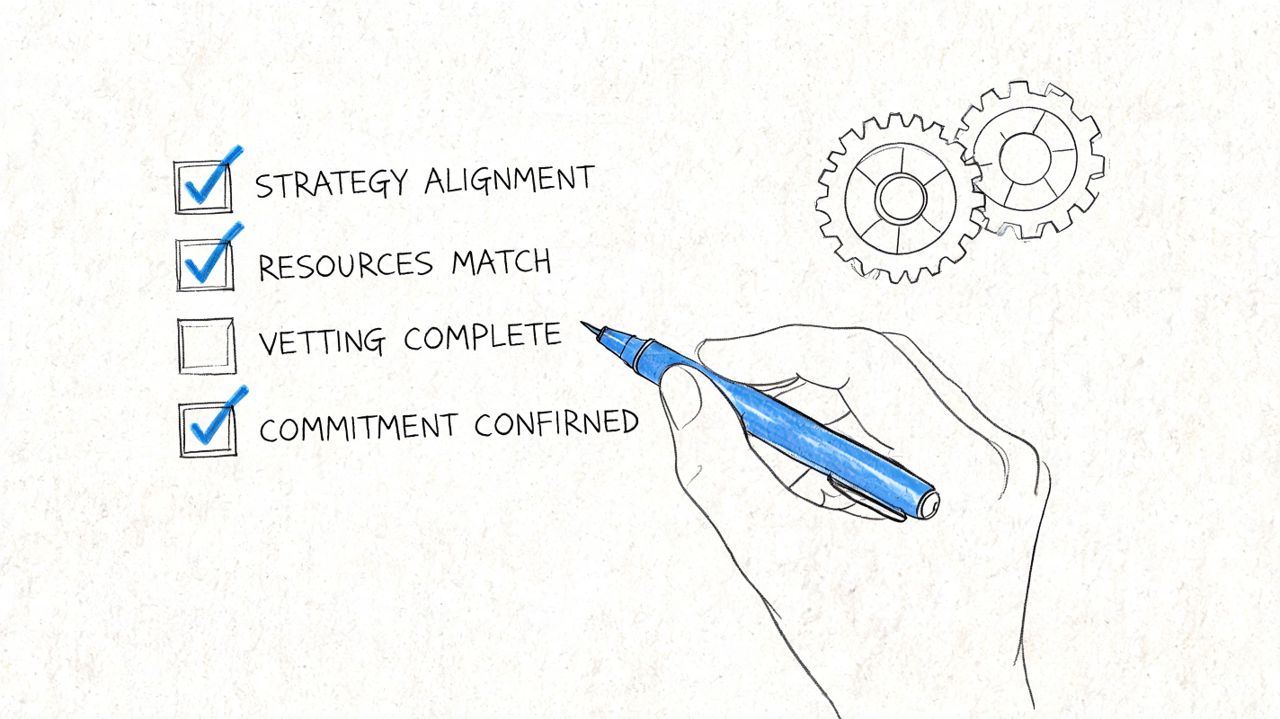
Choosing the provider matters more than choosing the tactic. A disciplined team can make outreach a durable asset. A careless one can burn budget and create cleanup work.
Questions worth asking before you sign
Use this as a live screening list in sales calls.
Can you show recent placements in a similar industry
Ask for live examples, not screenshots in a deck.How do you vet publisher quality
They should talk about topical relevance, editorial standards, outbound link patterns, and audience fit.Do you pre-approve domains with clients
You want visibility into where your brand may appear.Who creates the content and who reviews it
Weak writing can undermine both brand perception and SEO value.How do you report success
They should mention referral traffic, engagement, ranking movement, and conversion tracking, not just live link count.How do you avoid duplicate placements and poor-fit sites
This reveals whether they have a real system or a loose spreadsheet and a list broker.
Red flags that usually predict a bad campaign
Some warning signs show up fast.
| Red flag | Why it matters |
|---|---|
| Guaranteed volume with no discussion of fit | Suggests inventory selling, not editorial strategy |
| Flat per-link pricing regardless of site quality | Encourages quantity over relevance |
| No transparency on target sites | Prevents brand and risk control |
| No discussion of SEO goals | Means outreach is disconnected from rankings and revenue |
| Very fast promises | Good placements usually take time and coordination |
The standard I'd use
If a provider can't explain how outreach supports your broader SEO strategy, don't hire them.
That strategy should connect external authority to internal page priorities, content support, and conversion paths. Otherwise you're buying isolated placements and hoping they add up.
Ask one question near the end of every pitch: “Which pages on my site would you support first, and why?” The answer usually tells you how strategic the provider really is.
Frequently Asked Questions about Blogger Outreach Services
How long do blogger outreach services take to show results
Placements can go live relatively quickly or take longer depending on publisher responsiveness, editorial review, and content production. Business impact usually takes longer than the publication date. Outreach influences authority over time, so evaluate it as part of a broader SEO system rather than a same-week growth tactic.
Are blogger outreach services the same as guest posting
Not exactly. Guest posting usually means your side writes the article for another site. Blogger outreach can include guest posts, but it also covers reviews, listicle inclusions, expert quotes, resource mentions, and other editorial collaborations where the publisher controls the content.
Are blogger outreach services safe for SEO
They can be, if the work is relevant, editorial, and quality-controlled. They become risky when providers rely on spammy sites, manipulative placements, or networks built only to sell links. The safety comes from the process, not the label.
Do local businesses benefit from blogger outreach
Yes, if the campaign targets relevant local, regional, or niche publishers. Local brands often get value from mentions that reinforce service-area relevance, credibility, and referral traffic quality, especially when outreach supports existing local SEO work.
Should startups invest in blogger outreach early
Only after the basics are handled. If the site has weak landing pages, poor technical SEO, unclear messaging, or low conversion readiness, outreach won't be the best first investment. Once those pieces are in place, outreach can help a younger brand earn trust faster.
What should I expect in a monthly outreach report
Expect a list of live placements, target pages supported, referral traffic data, engagement quality, notes on publisher relevance, and commentary on whether the campaign is influencing rankings or conversions. If the report only shows link count, it's incomplete.
If you're deciding whether blogger outreach services deserve budget, the right move is to assess them inside a full SEO system. Authority building works best when technical SEO, commercial page strategy, content, and measurement all point toward revenue. SEOBRO® helps ecommerce, SaaS, and local businesses build that kind of search strategy, with senior-level execution tied to qualified traffic, leads, and long-term organic growth.