A lot of multi-location businesses are stuck in the same pattern. One branch ranks well and gets calls. Another sits in the same city and barely appears. A few Google Business Profiles are polished, others are incomplete, and the website has location pages that look different only because the city name changed.
That doesn't just create messy SEO. It creates missed revenue, wasted ad spend, and bad operating decisions. Teams start buying more paid traffic for local queries they should already own organically, while leadership has no clean view of which locations need technical fixes, better local authority, or stronger conversion paths.
The way out isn't another one-off optimization sprint. It's a system. Strong local seo for multiple locations depends on a repeatable operating model that covers audit, site architecture, GBP management, citations, reviews, content, links, and reporting across every branch.
The High Cost of Inconsistent Local SEO
When a brand has several locations, inconsistency shows up fast. One profile uses the right category set. Another points to the homepage instead of the location page. One branch has reviews flowing in every week, while another hasn't had a response from the business in months.
The result is fragmented visibility. You don't have one local search presence. You have a patchwork of separate entities with uneven quality, uneven authority, and uneven conversion potential.
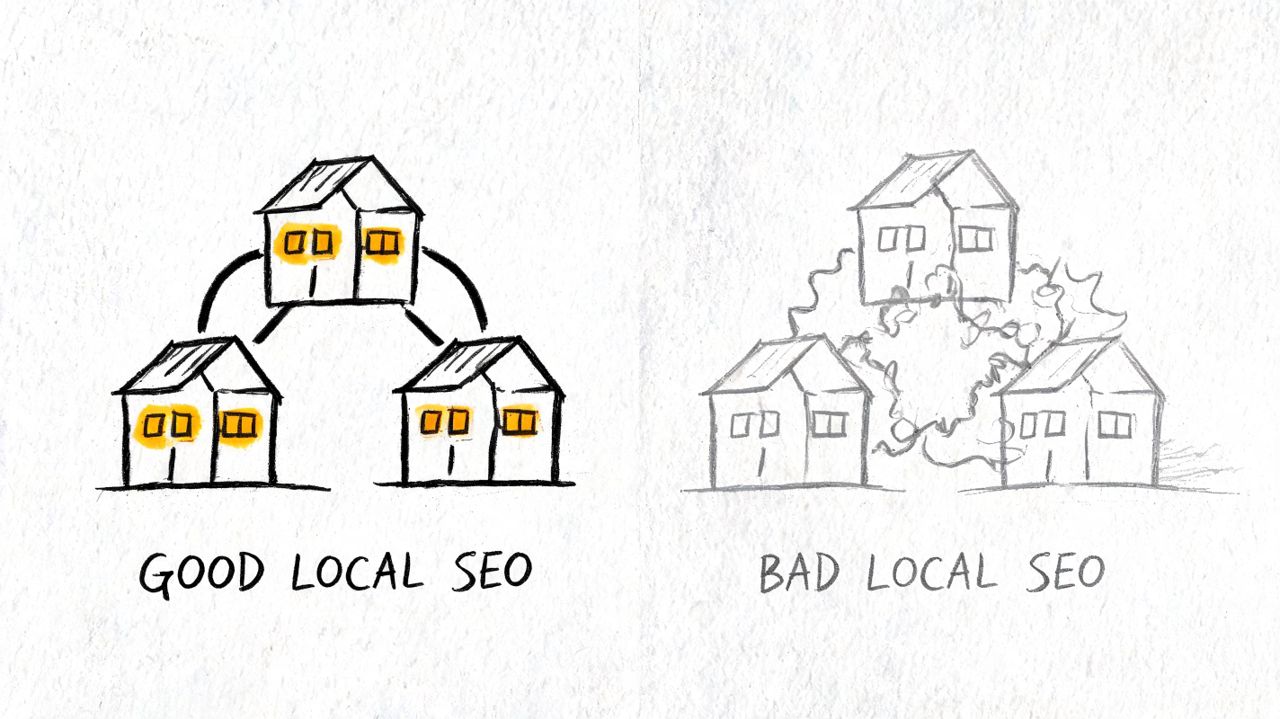
Why scattered execution hurts revenue
The commercial impact is straightforward. If your locations miss map pack visibility, competitors absorb calls, direction requests, and high-intent local clicks. According to SOCi's multi-location SEO analysis, businesses in the local 3-Pack receive 126% more traffic and 93% more conversion-oriented actions than businesses ranked in positions 4 to 10.
That gap matters more for chains and franchises than for single-location businesses because the losses compound across every weak branch. A few underperforming locations can pull down total lead volume even when the brand itself is strong.
Common symptoms show up in patterns like these:
- Uneven rankings by branch: A few locations dominate local search while others disappear for the same service set.
- Paid search covering organic failures: Teams bid on branded and near-me terms because local SEO hasn't been built properly.
- No single source of truth: Marketing, operations, and franchise owners all work from different spreadsheets and conflicting assumptions.
- Weak local conversion paths: Profiles get impressions, but pages lack location-specific trust signals, clear calls to action, or useful service detail.
Practical rule: If each location is managed like a separate side project, performance will stay uneven no matter how strong the brand is nationally.
What a scalable local system looks like
The fix isn't glamorous. It's operational discipline. Every location needs the same baseline controls, the same technical standards, and the same reporting logic, while still preserving local relevance.
That means central governance with local specificity. Brand teams should own architecture, data standards, schema, QA, and reporting. Local teams should support reviews, photos, service details, and real-world community relevance. When those roles blur, execution breaks.
For businesses trying to turn local search into a predictable acquisition channel, a strategic audit is usually the right first move. It gives leadership a clean picture of what's broken, what's fixable fast, and what needs structural work before more budget gets spent.
Your Foundational Audit and Strategy Blueprint
Most multi-location SEO problems start before content, links, or reviews. They start with bad records, missing ownership, conflicting business data, and no clear prioritization. If the audit is shallow, the rollout will be expensive and messy.
Audit the estate before touching tactics
Start with a full inventory. Every location should be logged in one master sheet or database with its canonical business name, address, phone number, landing page URL, Google Business Profile status, primary category, secondary categories, review status, and citation status.
A proper audit should cover four layers:
Google Business Profile control Check ownership, verification status, categories, hours, services, photos, Q&A, business description, and landing page assignment for each branch.
NAP consistency across the web Inconsistent NAP information causes many brands to lose visibility. A multi-location local SEO audit reference from SEO Design Chicago notes that 80% of multi-location businesses have inconsistent NAP, which can lead to 25-40% lower local rankings.
Location page quality Review indexation, internal linking, title tags, headings, local copy, conversion elements, and whether each page deserves to rank on its own.
Reputation and authority signals Look at review recency, review response process, citation coverage, and whether any locations have obvious trust gaps compared with stronger branches.
If you want an additional outside perspective on process and execution, this expert guide for multi-location SEO is a useful companion resource.
Turn findings into a rollout plan
Don't treat every issue equally. Some problems block growth. Others are just polish.
A practical prioritization model looks like this:
| Priority level | Focus area | Why it comes first |
|---|---|---|
| High | GBP ownership, wrong landing pages, duplicate or inconsistent NAP | These issues suppress visibility across the entire local footprint |
| Medium | Thin location pages, poor internal links, weak schema | These limit relevance and indexation quality |
| Medium | Missing review process, poor photo coverage, unmanaged Q&A | These reduce trust and click-through quality |
| Lower | Content expansion, local link outreach, additional supporting pages | Valuable after the foundation is stable |
Tools help here, but tools don't replace judgment. BrightLocal, Semrush, Google Business Profile Manager, Screaming Frog, and Google Search Console can gather the data. Someone still has to decide what deserves engineering time, what can be templatized, and what needs local input.
Audit output should become an operating roadmap, not a slide deck. If nobody knows who fixes what and in what order, the audit was too abstract.
Architecting for Scale with GBP and Location Pages
Most brands don't fail because they lack tactics. They fail because the architecture doesn't support scale. A website built for five locations often breaks at twenty. A GBP process managed manually by scattered teams becomes unreliable even faster.
Choose a structure that can survive growth
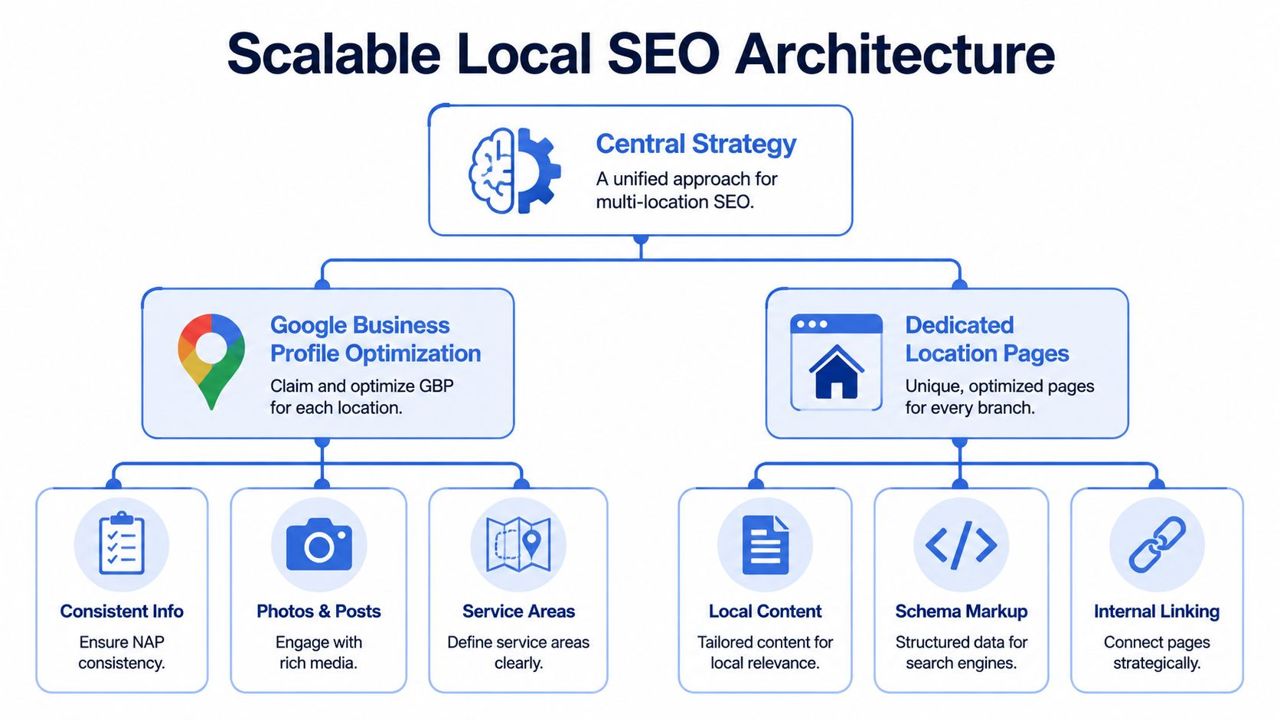
For most businesses, the cleanest model is a hub-and-spoke setup. A central locations hub page sits under the main domain and links to dedicated location pages for each branch. That structure keeps authority consolidated while helping users and search engines move from brand-level intent to location-level intent.
Thin copies of the same page won't hold up. A cited recommendation from the referenced local SEO study summary argues for hub-and-spoke models with a central brand authority page linking to templated, entity-enriched spokes using LocalBusiness schema arrays, and notes this can improve entity clarity by 40% in Google's parsing.
That point matters because multi-location SEO now depends on entity clarity as much as traditional on-page relevance. Google needs to understand that each branch is a distinct local entity, but still part of the same brand system.
Template smart and customize where it matters
Templates are not the enemy. Bad templates are.
A good location page template standardizes the parts that should never drift:
- Core NAP fields: Keep formatting locked and consistent.
- Primary conversion elements: Calls, forms, booking actions, and direction links should be in the same predictable positions.
- Schema framework: Build once, populate per location.
- Internal linking blocks: Related services, nearby locations, and locations hub links should follow rules, not guesswork.
Then add real local differentiation where it affects rankings and conversions:
- Intro copy tied to the market served
- Unique services or specialties at that branch
- Photos of the actual team or location
- Local testimonials
- Local FAQs
- Driving or parking notes
- Nearby neighborhood references when relevant
A useful implementation reference on this side of execution is this resource on proven multi-location SEO techniques, especially for teams trying to balance consistency with location-level customization.
Technical signals that support location relevance
Several technical details make the architecture work in practice.
First, connect each Google Business Profile to the correct destination page. Not the homepage. Not a generic contact page. The exact location page.
Second, add structured data that reflects the actual branch. LocalBusiness details should align with visible page content and GBP data.
Third, keep the crawl path clean. Location pages should be included in XML sitemaps, linked from the locations hub, and reachable within a sensible number of clicks from key navigation paths.
The architecture should reduce manual decisions. If every new branch requires a custom SEO reinvention, the system won't scale.
Building Local Authority with Citations and Reviews
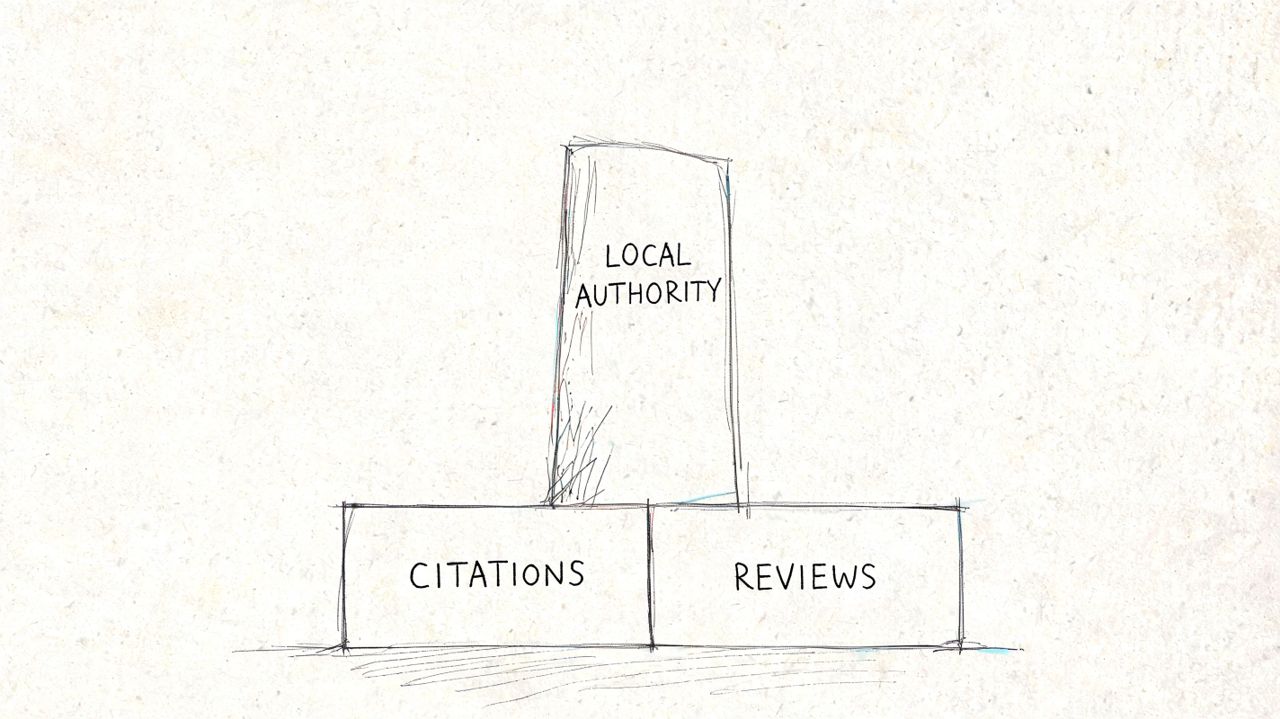
Once the structure is stable, authority becomes the differentiator. In local seo for multiple locations, that usually comes down to two systems most brands under-manage. Citations and reviews.
Citation management is ongoing maintenance
A one-time cleanup helps, but it doesn't solve the persistent problem. Listings drift. Aggregators overwrite fields. Old phone numbers reappear. Closed hours persist. Franchisees submit their own versions. Agencies create duplicates and disappear.
That's why citation management should be treated as maintenance, not setup. According to this multi-location citation analysis, businesses rank 2.5x lower if citation freshness falls below 85%, and 72% of businesses lose 30% of citations annually due to aggregator churn.
What works in practice is a tiered model:
- Core platforms first: Google, Apple Maps, Bing, Yelp, and major data sources should always be correct before you expand.
- Industry directories second: Healthcare, legal, home services, hospitality, and retail all have trusted niche platforms that matter.
- Regional cleanup third: Local chambers, city directories, and market-specific websites can strengthen location-level trust.
- Monitoring always: Use BrightLocal, Yext, Whitespark, or similar systems to catch drift and duplicates before they spread.
A strong rule for chains is simple. No location opens, moves, rebrands, or changes phone numbers without an SEO data update process attached to that event.
Review systems need operations not reminders
Reviews are often treated like a marketing afterthought. That's a mistake. Multi-location review growth depends on frontline process, not just software.
Build the workflow around service completion or purchase completion. Give local teams a trigger, a script, and a short path to the review destination. Keep ownership clear. If nobody at the branch level is accountable, the request never happens consistently.
Useful review operations usually include:
- Defined timing: Ask after a positive interaction, not weeks later.
- Channel fit: SMS works for some service businesses. Email is better in others.
- Manager response rules: Positive and negative reviews both need a documented response workflow.
- Escalation paths: Serious complaints shouldn't sit in public unanswered while staff debate ownership.
Here's a practical overview that helps visualize local reputation work in context:
Reviews do more than influence rankings. They change conversion behavior. The branch with stronger recent feedback usually earns the click before the website even gets a chance.
One more operational point. Don't centralize tone so aggressively that every response sounds robotic. Keep response guidelines centralized, but allow enough local voice that customers feel an actual manager is paying attention.
Activating Growth with Hyper-Local Content and Links
Foundational work gets you into the game. Hyper-local content and local links help you win specific markets. This enables multi-location brands to stop looking like a chain with cloned pages and start looking like a business that belongs in each community.
Content that proves local relevance
A strong location page isn't the same thing as a content strategy. Once the location architecture is in place, each branch needs supporting content that reflects local demand, local questions, and local proof.
Good hyper-local content usually falls into a few categories:
| Content type | Example use | Why it works |
|---|---|---|
| Neighborhood service pages | “Emergency plumber in Lincoln Park” | Matches specific local intent below the city level |
| Local proof content | Customer stories from a specific branch area | Builds trust and supports conversion |
| Community content | Sponsorships, events, local guides, partnerships | Shows real local relevance beyond service copy |
| FAQ content | Parking, service radius, appointment details, common local concerns | Helps both users and search engines understand location details |
This work matters because local queries often convert fast. Intellibright's multi-location SEO guide notes that 76% of local mobile searches convert offline within 24 hours. If your content is too generic to earn the visit, the lead goes to the business that looks closer, clearer, and more trustworthy.
Links that strengthen location-level trust
Corporate authority helps, but it doesn't replace local authority. A branch page gets stronger when local organizations, media outlets, associations, and community sites mention that actual location.
The most reliable local link sources are rarely glamorous:
- Community sponsorships: Youth sports, nonprofit events, school programs, and local festivals.
- Business partnerships: Nearby complementary businesses, suppliers, property managers, and associations.
- Local press opportunities: New openings, relocations, charity work, expert commentary, and market-specific announcements.
- Membership links: Chambers of commerce, trade groups, neighborhood associations, and accredited directories.
A branch doesn't need dozens of flashy links. It needs credible local references that confirm it operates in that market and is known by people there.
The trade-off is time. Hyper-local pages and link outreach require coordination with local managers, franchisees, or field teams. That slows production compared with templated content. It's still worth it in competitive markets because it creates separation that generic location SEO can't.
Scaling Operations with Automation and Reporting
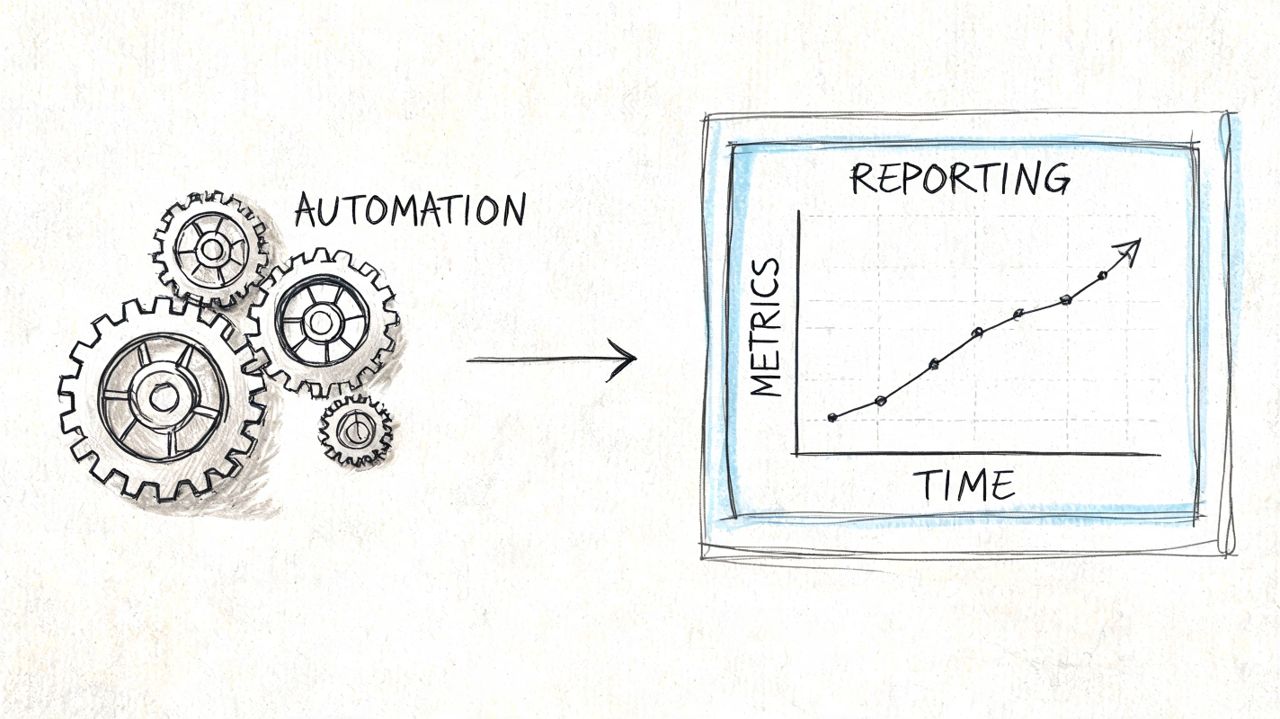
Multi-location SEO breaks when the operating model depends on memory. Someone forgets to update hours. A new branch launches without schema. Reviews pile up unanswered. A location page goes live but isn't added to the sitemap. None of those failures are dramatic on their own. Together, they create visibility loss at scale.
What to automate first
Start with repeatable operational checks, not flashy dashboards.
The first workflows worth automating are usually:
Review alerts Route new reviews to the right local manager and central marketing owner.
Listing change detection Monitor core citations and GBP fields for drift, duplicates, or unauthorized edits.
Location page QA Flag missing schema fields, broken internal links, indexing issues, or mismatched NAP on newly published pages.
Rank and visibility tracking Track location-level presence by market, not just domain-wide averages.
Lead routing validation Make sure forms, call tracking, and booking paths connect to the correct branch.
The specific stack varies by business, but common combinations include BrightLocal for listings and local ranks, Semrush for broader visibility tracking, Looker Studio for dashboards, Screaming Frog for site QA, and a CRM or call tracking platform for lead attribution.
For service businesses that need cleaner handoffs between marketing and field operations, this guide on automating contractor workflows is relevant because it shows how operational automation supports lead handling after the search click.
What executives should actually see in reports
Most local SEO reporting is too noisy. It leans on impressions, keyword counts, and screenshots of rankings without connecting them to actual business outcomes.
A useful multi-location report should answer five questions:
- Which locations gained or lost meaningful local visibility?
- Which branches generated more calls, direction requests, bookings, or form leads?
- Which issues are systemic across the network?
- Which branches are underperforming because of execution gaps versus market difficulty?
- What actions should happen next month?
A practical reporting view looks like this:
| Reporting layer | Best metric focus |
|---|---|
| Executive summary | Lead volume by location, major wins and risks |
| Regional or franchise view | Visibility trends, review trends, citation health, local conversion trends |
| Location detail | GBP actions, landing page performance, review response status, open issues |
| Implementation tracker | Completed fixes, blocked tasks, next priorities |
If a report can't tell operations which locations need action, it's a vanity report.
Raw traffic matters less than qualified local action. Direction requests, phone calls, bookings, and form submissions from location pages are closer to revenue. The best reporting systems map those signals to the branch level so leaders can see where SEO is creating actual commercial value.
Common Pitfalls and Troubleshooting
Even well-run programs hit problems. The difference is whether the team has a response process.
Merged listings and ownership conflicts
Google sometimes merges similar listings or surfaces the wrong branch for branded searches. The usual signs are mismatched reviews, wrong photos, or one location inheriting another location's visibility. Start by documenting the issue with screenshots, checking for duplicate records, and confirming that each profile points to the correct canonical location page and business details.
Ownership conflicts are another frequent mess, especially after staff changes or agency turnover. Keep a central register of profile owners and managers. If access is fragmented, recover control first. Don't keep optimizing a profile that the business doesn't fully control.
A few simple controls help prevent repeat problems:
- Central ownership: Keep primary profile access under the business, not an outside vendor or former employee.
- Location naming standards: Don't let branches improvise branding in profile titles.
- Change logging: Record updates to hours, phone numbers, categories, and landing pages.
Review attacks and proximity problems
Review bombing requires triage. Respond calmly, flag reviews that clearly violate platform rules, and move real complaints into a customer service workflow fast. Don't publish defensive template replies across every location. That usually makes the issue more visible without resolving it.
Proximity-related ranking drops are harder because they aren't always fixable by one tactical change. If a downtown branch no longer appears strongly in suburban searches, diagnose whether the business is trying to rank outside realistic local relevance. Strengthen service-area language where appropriate, improve location-page depth, and look for better neighborhood-level content and links. But be honest internally. Some ranking loss is a proximity reality, not a technical failure.
When rankings drop in one market, compare the full local signal set before blaming the algorithm. Missing reviews, stale citations, or weak page relevance often explain the decline.
Frequently Asked Questions about Multi-Location SEO
What's different about multi-location SEO
Single-location SEO focuses on one entity, one market, and one set of local signals. Multi-location SEO adds operational complexity. You're managing shared brand authority across many distinct local entities, each with its own profile health, reviews, citations, competitors, and conversion performance.
Can location pages reuse the same content
They can share structure, but they shouldn't share near-identical copy. Repeating the same page with only a swapped city name usually leads to weak local relevance and poor differentiation. Templates are useful for scale. The local details inside the template need to be specific.
How long does multi-location SEO take
It depends on the starting condition. If ownership, data consistency, and site structure are broken, early months often go into cleanup and rebuilding. If the foundation is already sound, gains can come faster. The important point is that multi-location SEO works best as an ongoing operating system, not a short campaign.
How should businesses budget for it
Budget should reflect complexity, not just location count. Ten well-governed locations can be easier than four locations with franchise-level control issues and bad site architecture. A practical budget should account for strategy, implementation, content, local authority work, and reporting. If the plan only covers rankings and ignores operations, it's under-scoped.
Should every location have its own Google Business Profile and landing page
In most cases, yes. Each real branch needs its own accurate profile and its own dedicated page if you want location-specific visibility, cleaner attribution, and better control over local relevance.
What matters more, citations, reviews, or content
That's the wrong framing. Local SEO for multiple locations performs best when the essentials work together. Clean business data, strong profile management, trustworthy reviews, strong pages, and local authority signals support each other. If one layer is weak, the others won't carry the whole system for long.
If you're running a multi-location brand and need a cleaner path from scattered local activity to measurable lead growth, SEOBRO® can help you build the system properly. That usually starts with a strategic audit, a prioritized roadmap, and hands-on implementation tied to visibility, qualified leads, and revenue instead of vanity traffic.